
Search North Carolina Background Check Records
North Carolina background check records are kept by the State Bureau of Investigation and the Clerk of Superior Court in each of the 100 counties. The SBI serves as the central repository for criminal history data across the state. County courts hold case files with arrest records, charges, and court outcomes. You can run a background check in North Carolina through the SBI, at a local courthouse, or by using the eCourts portal online. Several options exist for both personal review and authorized record searches statewide.
North Carolina Background Check Quick Facts
North Carolina Background Check Through the SBI
The North Carolina State Bureau of Investigation was set up in 1937. It is the central hub for criminal data in the state. The SBI has its main office in Raleigh and eight district offices. Staff there handle fingerprint cards and criminal history files for all 100 North Carolina counties.
The SBI offers several types of background checks. A personal background check, known as the Right to Review, lets you see your own North Carolina criminal history. This requires a fingerprint card, a form, and a fee. The SBI also provides background checks for qualified organizations and authorized agencies. Each type has its own scope and rules. Fingerprint-based checks are more accurate than name-based searches because they match records to a specific person. The SBI Civilian Services Unit processes checks for more than 5,000 non-criminal justice agencies across all 100 counties in North Carolina. You can reach the SBI Customer Service Unit at (919) 582-8660 or by email at CIIShelp@ncsbi.gov for questions about a background check in North Carolina.
The SBI background check page lists the steps for each type of request. Staff enter fingerprints into the Computerized Criminal History File, known as the CCH. These records are then indexed to the FBI criminal history files. This means a North Carolina background check through the SBI can pull both state and federal records when authorized.
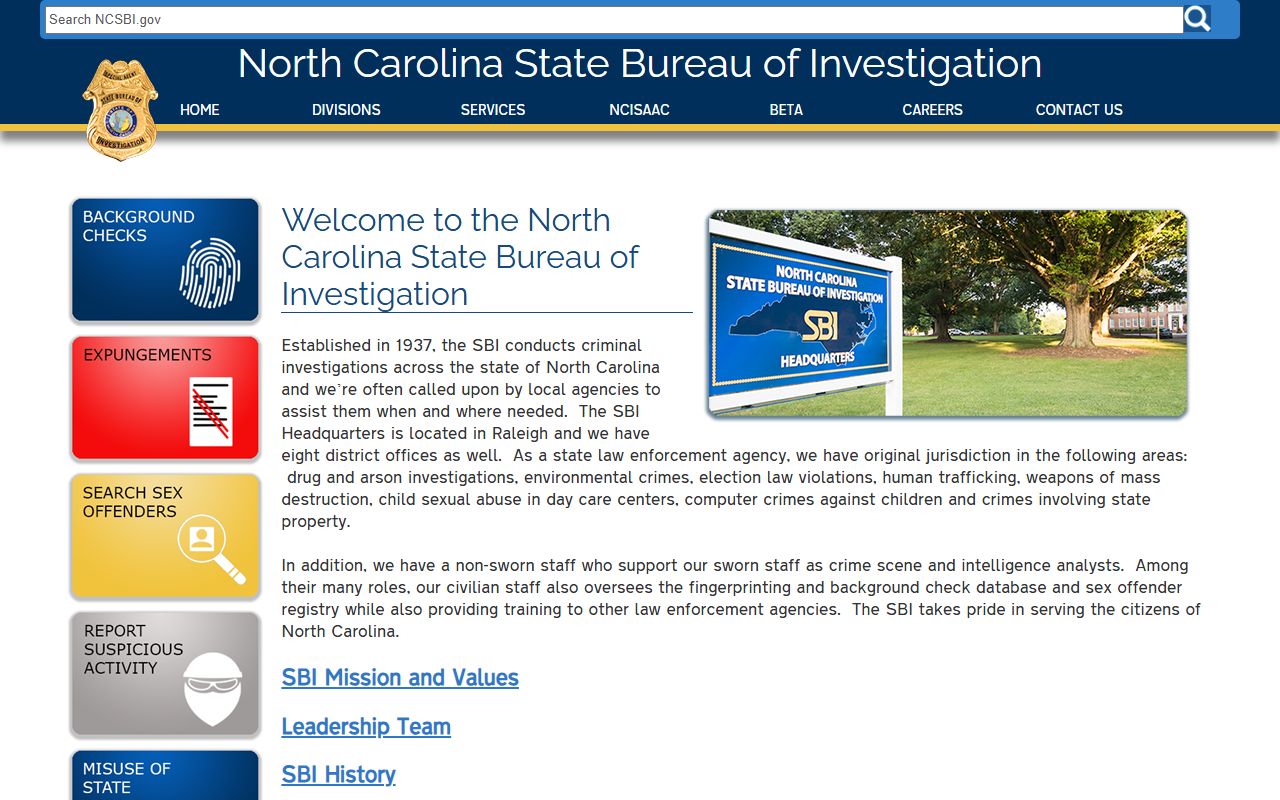
The SBI runs the Statewide Automated Fingerprint Identification System, or SAFIS. This network links Live Scan devices across North Carolina. Devices capture and send fingerprint images to the Criminal Information and Identification Section. Technicians compare prints and verify identity. When no prior record exists, they create a new criminal history record during this step.
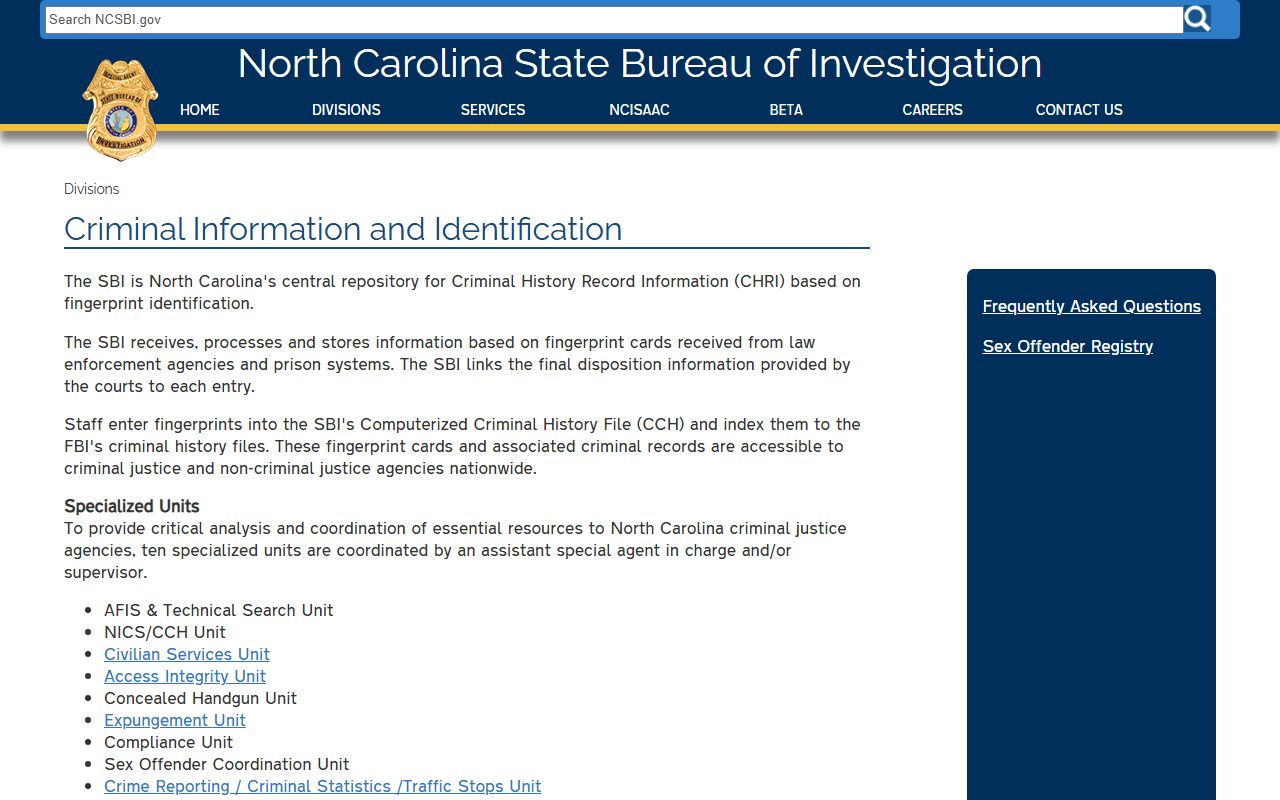
CIIS manages the entire lifecycle of criminal records in North Carolina, from fingerprint capture to final disposition entry.
Note: A personal Right to Review background check from the SBI covers North Carolina records only and is not a certified document.
Background Check at North Carolina Courts
The North Carolina Judicial Branch gives access to court records in all 100 counties. Each county has a Clerk of Superior Court that keeps criminal case files. Files hold arrest data, charges, plea deals, trial results, and sentencing details. Court-based record searches in North Carolina are tied to a single county unless you use statewide tools.
The NC Judicial Branch portal connects you to courthouses, forms, and case search tools across the state.
You can get a certified criminal record search in one county for $25. Fill out Form AOC-CR-314 and bring it to the clerk of court office. Payment can be made by credit card, cash, money order, or certified check if you go in person. For mail requests, only money orders and certified checks are accepted. This search covers court records in that one county only. It is not a statewide background check.
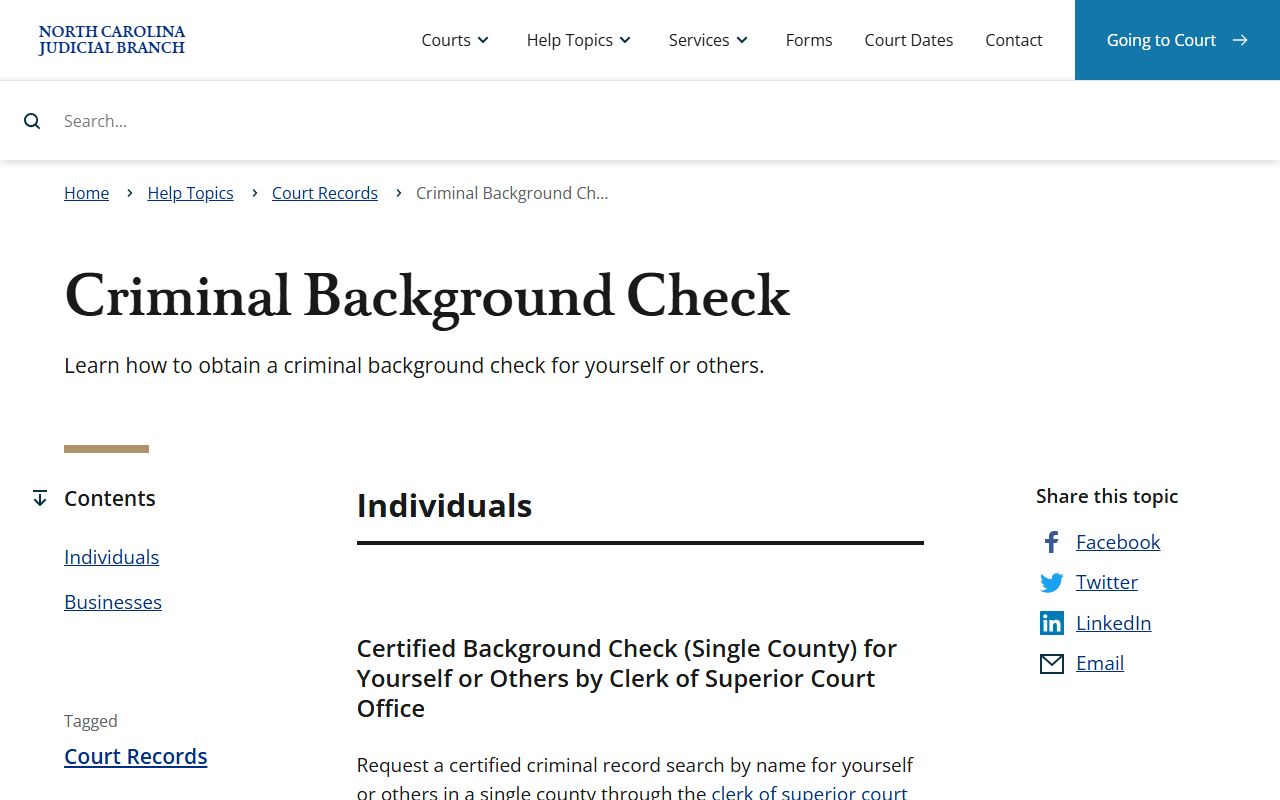
The NC Judicial Branch website walks you through the full process for requesting court-based criminal records in any county.
A faster option is the self-service search. You can use public access computers at any courthouse to look up criminal records for free. These terminals let you search, view, or email records in any county or statewide. The results are not certified, but they give you a quick way to check records without a fee. According to the NC Courts background check page, individuals should use the county clerk office for a formal background check rather than the online portal.
Note: Self-service terminal searches are free but not certified, and printing fees may apply at some courthouses in North Carolina.
Online Criminal Record Search Tools
North Carolina has several online tools for running a background check. The eCourts portal at nccourts.gov lets you search court records by name, case number, or attorney. This covers civil, criminal, and traffic cases across all counties. The portal is free and open to the public. It shows basic case data like party names, filing dates, and case status.
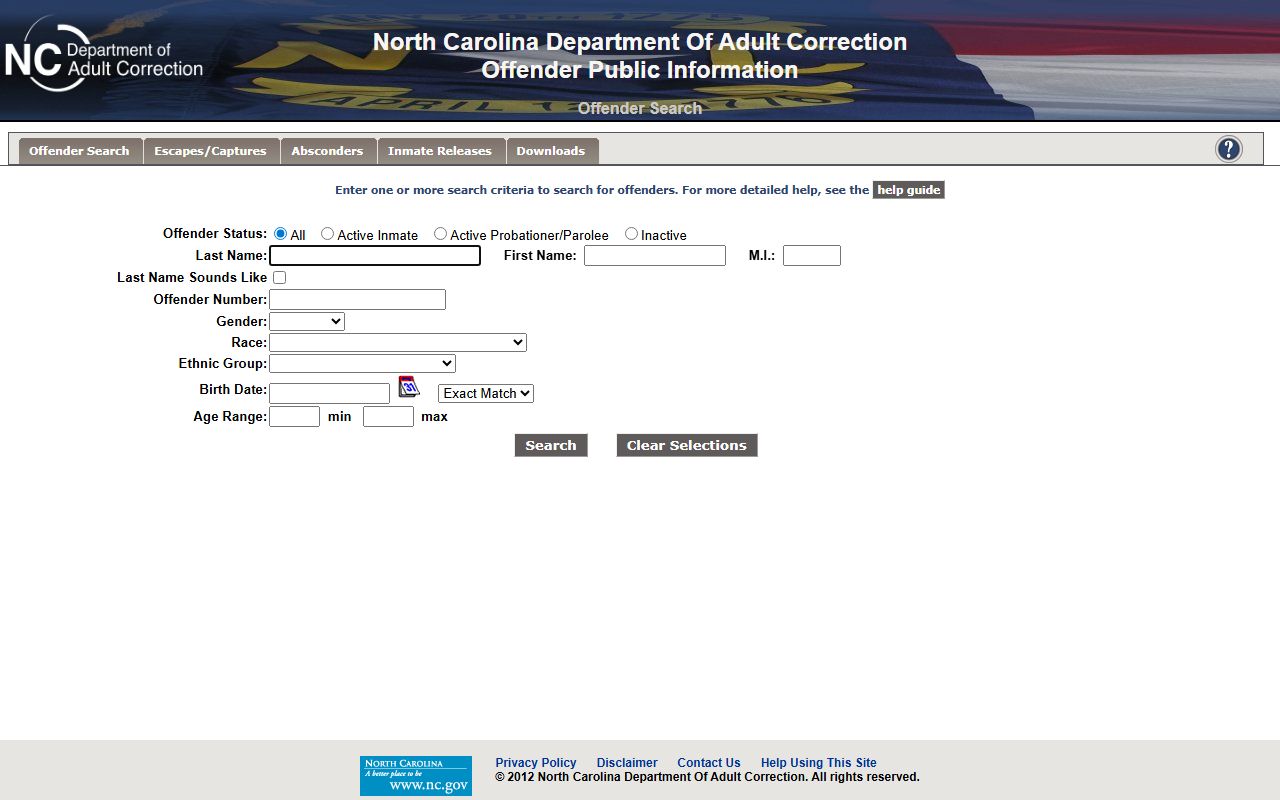
The NC Department of Adult Correction Public Offender Search is another key tool. It has data on people who are serving or have served state prison time. It also includes those on parole. This is useful when a background check in North Carolina needs to cover state corrections records beyond what court files show.
The North Carolina Sex Offender Registry is run by the SBI. You can search by name, city, zip code, or address. The registry also offers email alerts for changes in offender status. Victims can sign up for phone alerts through the VineLink notification program. This registry is a critical part of any thorough background check in North Carolina.
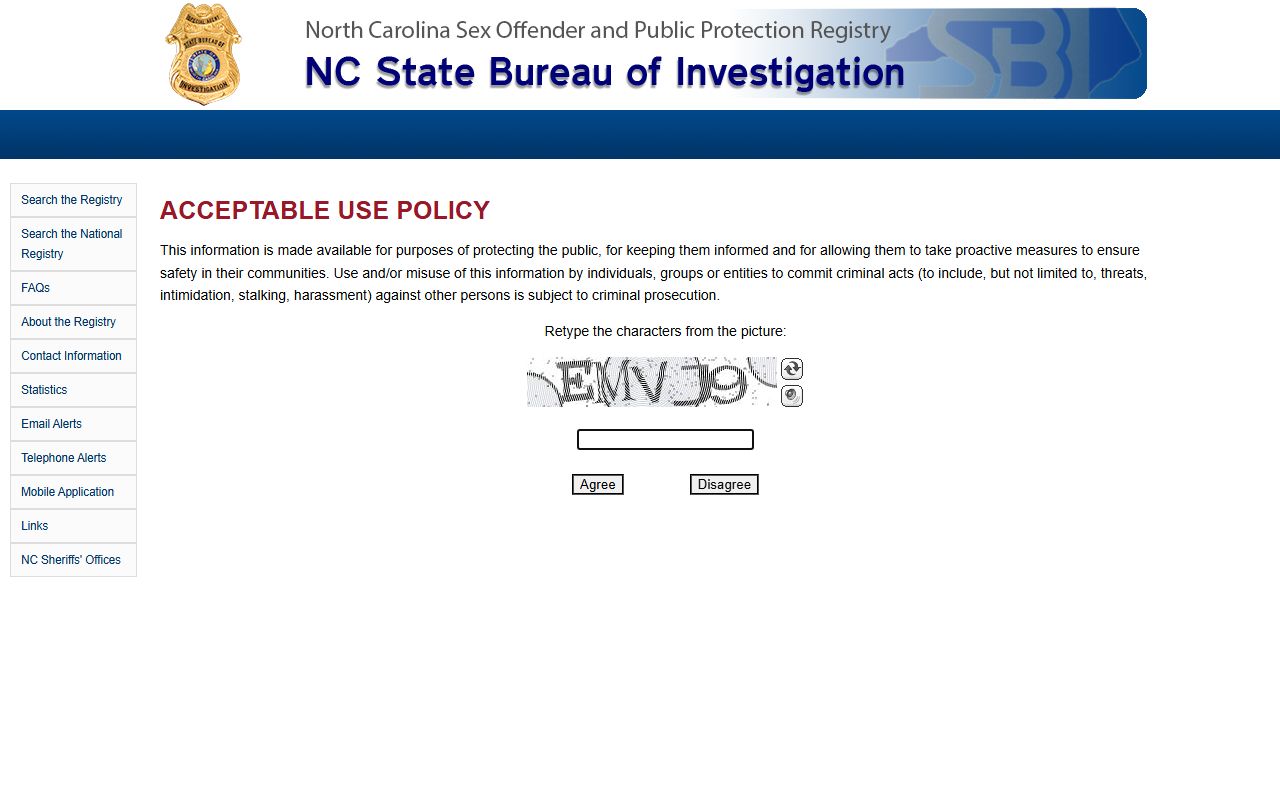
Anyone can use this registry at no cost. It is one of the most accessed public safety tools in North Carolina.
The SBI background check services page also connects to related tools and forms for running a complete search across North Carolina.
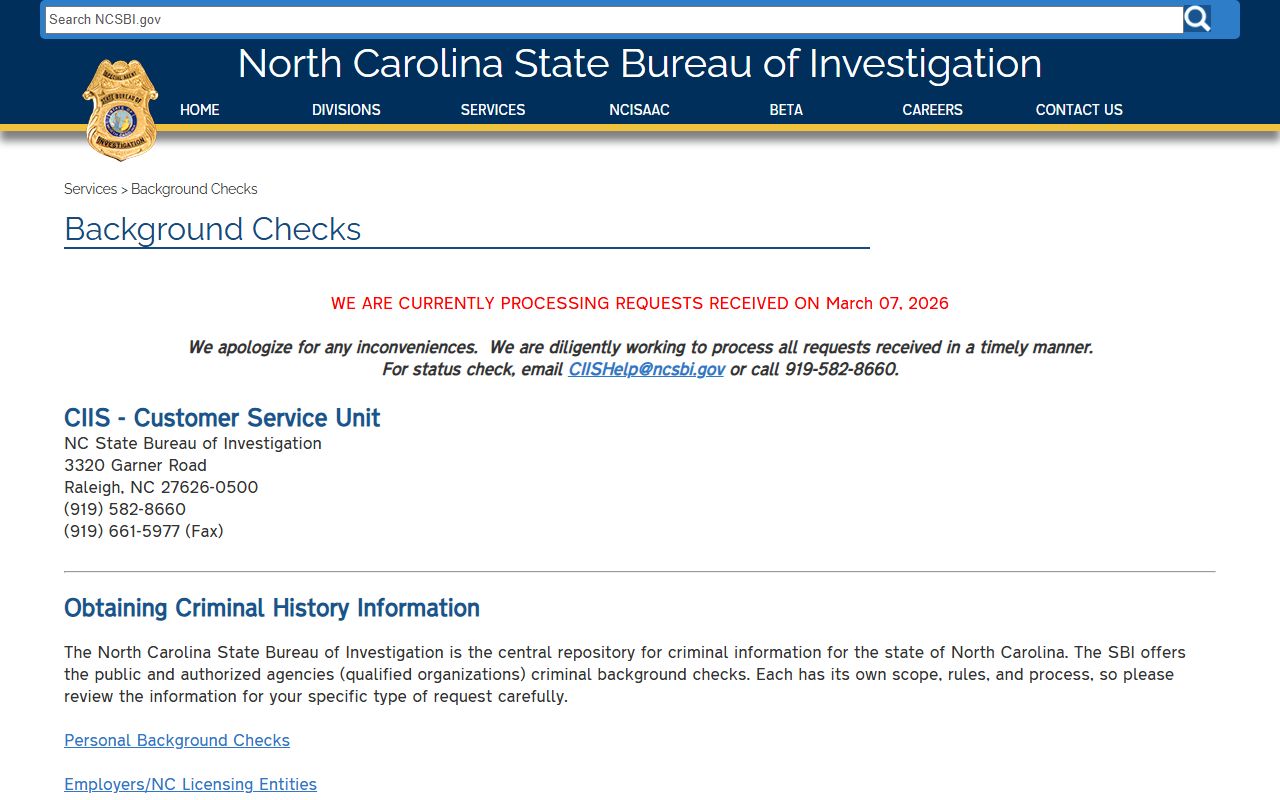
This page is the starting point for personal, organizational, and agency-level background check requests through the SBI.
Note: Combine multiple search tools for the most complete background check results in North Carolina.
North Carolina Background Check and Expungements
An expungement can change what shows up on a background check in North Carolina. When a record is expunged, it is sealed or removed from the state criminal history files. The person can then legally deny the arrest or charge ever took place. The SBI Expungement Unit handles these requests. They process petitions and remove designated records from the state system and the SAFIS fingerprint database.
North Carolina has many expunction statutes. Some cover drug possession. Others apply to people under 18 or 21 at the time of the offense. Dismissed charges and not guilty verdicts may also qualify. Filing costs $175 in most cases. When charges were dismissed or ended in acquittal, the fee may be waived. You file the petition in the county where the arrest took place. The NC Courts expunction page has forms and guides for each type. Legal Aid of North Carolina can help with some cases at 1-866-219-5262.
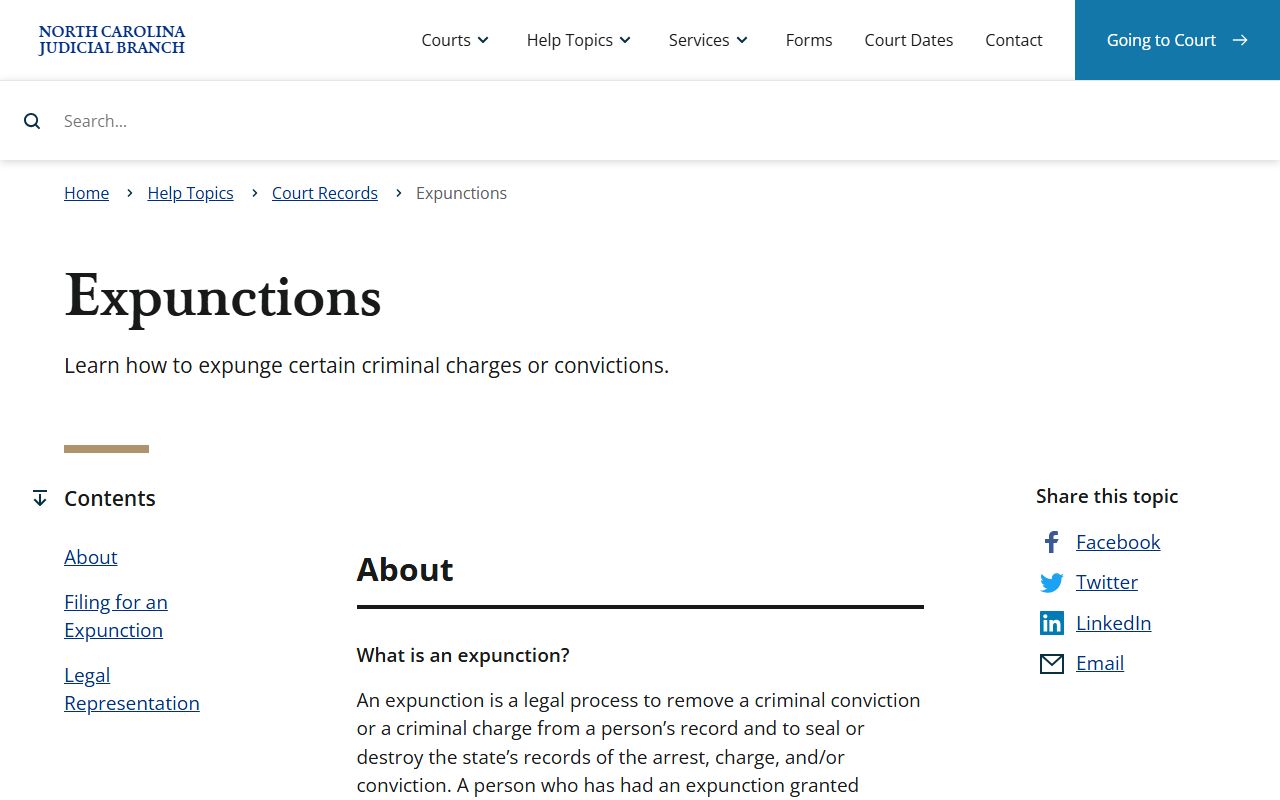
Court forms for every expunction type are available for free download from the NC Judicial Branch website.
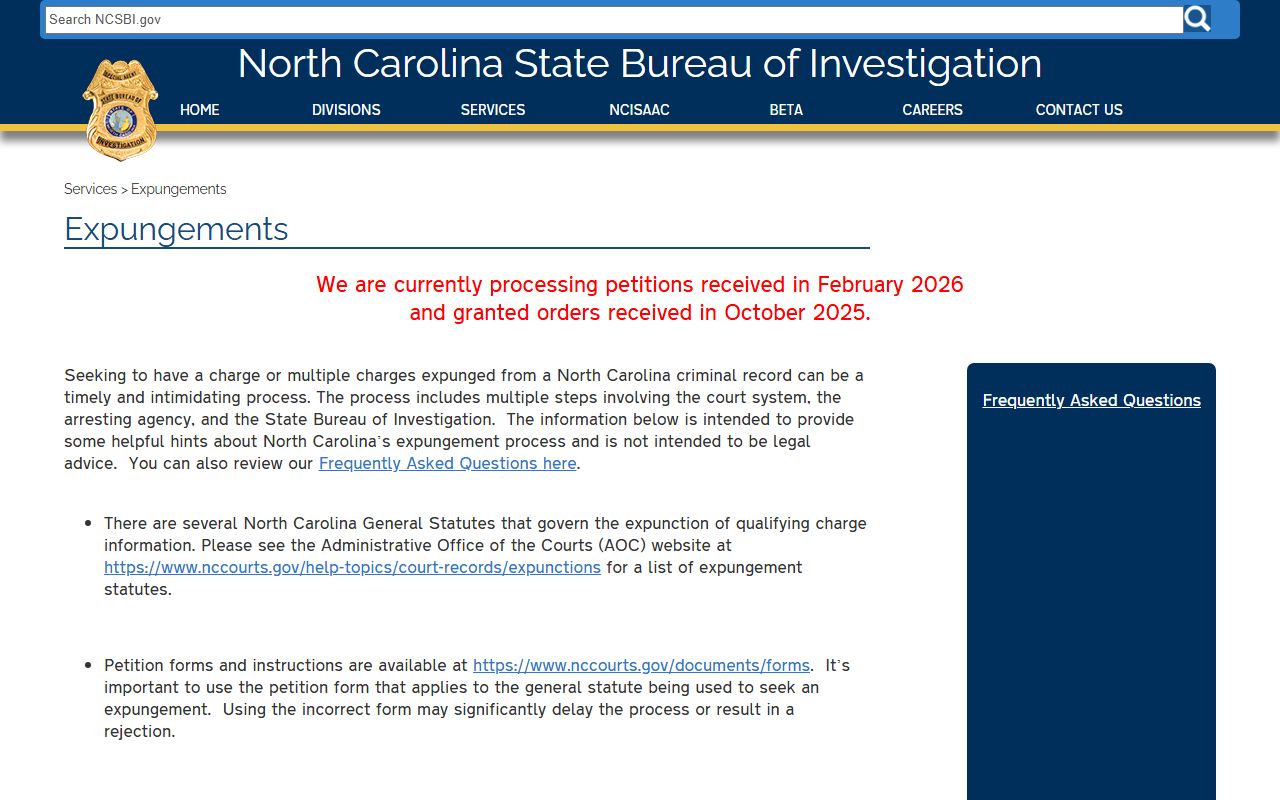
After an expunction is granted, the clerk destroys all related files. You cannot get a copy of the expunction order later. If your petition was filed on or after December 1, 2017, you can request a certificate from the NC Administrative Office of the Courts to verify the expunction happened. Keep in mind that an expunged record may still appear on private background check sites. You would need to contact those sources directly to have it removed.
North Carolina Laws on Background Checks
Several parts of the North Carolina General Statutes govern how a background check works. Chapter 114 covers the Department of Justice and SBI operations. Article 3 of that chapter deals with Criminal Justice Information Systems, which is the legal framework for how criminal history records are stored and shared. Separate articles within Chapter 114 cover criminal record checks for various purposes and expunction of records.
Chapter 15A is the Criminal Procedure Act. It sets the rules for arrests, searches, and seizures across North Carolina. Chapter 132 is the Public Records law. It gives citizens the right to access government records, including many court files used in a background check. NC law requires an ordinance, federal mandate, state statute, or Governor's executive order for non-criminal justice agencies to access SBI criminal history records. The General Statutes database at ncleg.gov has the full text of all these laws.
You can look up any statute by chapter and section on the General Assembly site. Legislative staff cannot give legal advice, but the full text of every law is available for free.
North Carolina Record Sources
North Carolina Vital Records handles birth, death, marriage, and divorce records. These are part of the NC Department of Health and Human Services. Vital records are not free public records under NC law. You must pay for certified copies. Due to high demand tied to REAL ID requirements, processing can take 110 to 115 business days. The office is at 225 N. McDowell Street in Raleigh. You can call them at 919-733-3000.
The NC Department of Public Safety oversees several divisions that tie into background checks. These include the State Highway Patrol, Adult Correction, Juvenile Justice, and Alcohol Law Enforcement. The department has about 3,000 staff members plus around 10,000 NC National Guard members. Their mission is to safeguard lives and property across North Carolina.
Professional licensing boards in North Carolina also run background checks. For example, the Board of Licensed Clinical Mental Health Counselors requires one as part of its application. That fee is $28, included in the $238 total cost. Other boards with similar requirements include the NC Board of Nursing, the Real Estate Commission at ncrec.gov, and the Office of State Fire Marshal at ncosfm.gov.
Understanding Your Results
Results from a background check in North Carolina depend on which method you use. The SBI Right to Review returns your personal criminal history. It includes data from the Computerized Criminal History File. Court searches return case-level details from one county or statewide if done at a public terminal. The offender search tool shows prison and parole data. Each tool covers a different piece of the puzzle.
For a full picture, many people combine several sources. Running an SBI check gives statewide criminal history. Adding a court search provides case details. The sex offender registry and offender search tools fill in more gaps. No single source covers everything. North Carolina does not have one portal that pulls all records into a single report for the general public.
Third-party vendors also offer background checks using NC court data. The NC Administrative Office of the Courts lists companies that get data through licensing agreements. These vendors can run statewide searches. The records they get from NCAOC reflect what is in the clerks' databases. But the NCAOC cannot guarantee the data these companies give to customers is current or correct.
Note: Always verify background check results against official sources, as third-party data may not be up to date in North Carolina.
Browse by North Carolina County
Each county in North Carolina has its own Clerk of Superior Court that keeps criminal records. Pick a county below to find local contact info and background check resources in that area.
Major North Carolina Cities
Residents of major cities can run a background check at their county courthouse or through the SBI. Pick a city below to learn about background check resources in that area.