
Macon County Background Check Search
Macon County is in the mountains of western North Carolina. Franklin is the county seat. The county borders Georgia to the south and covers rugged terrain in the Nantahala National Forest area. With around 37,000 residents, Macon County is a smaller community with a close-knit feel. Criminal and court records are available through the Clerk of Superior Court and the sheriff's office. North Carolina's public records laws ensure transparency. This page explains how to search for background check records in Macon County.
Macon County Government
Macon County government is based in Franklin. The county operates departments for public safety, land records, and court administration. Public records are accessible through multiple offices. The register of deeds handles property filings. The clerk of court manages case records. The sheriff's office oversees law enforcement.
The following image shows the Macon County government website.
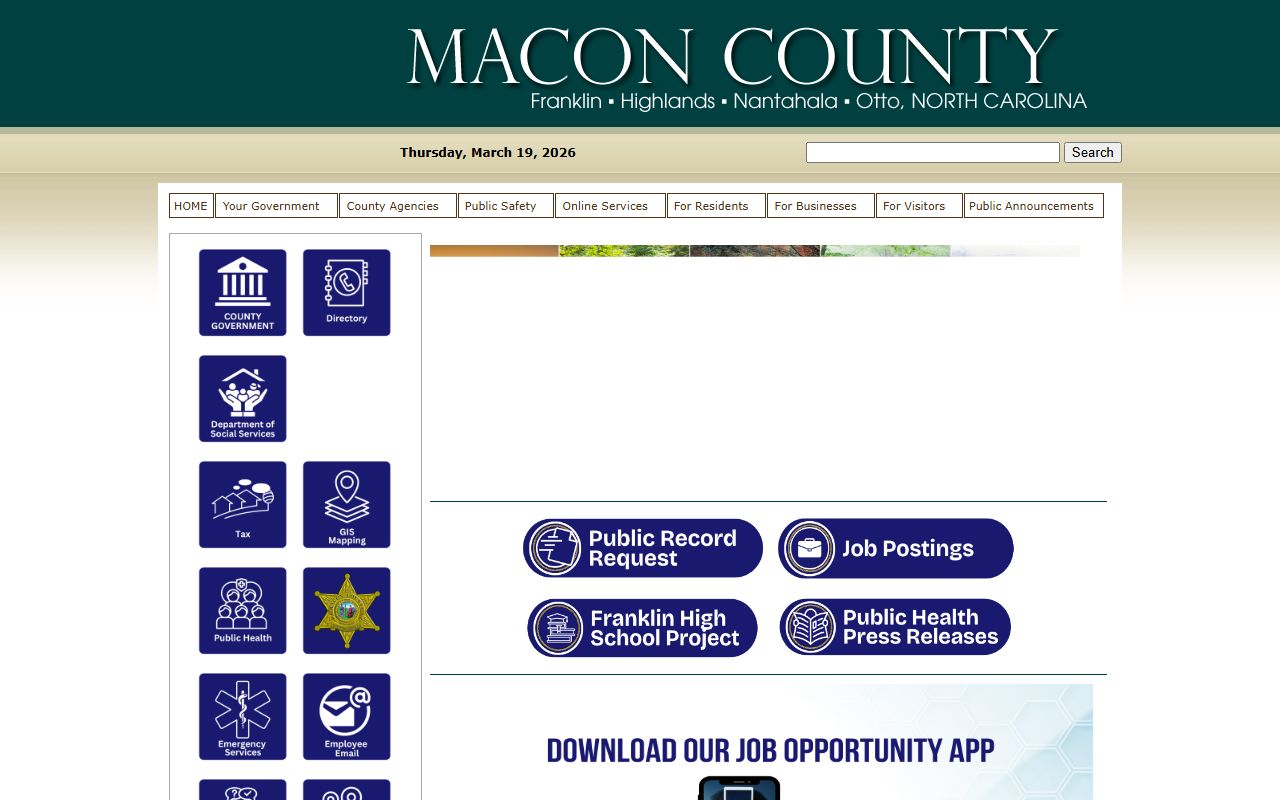
The county website lists department contacts and hours. Many residents start their records search here before visiting an office in person.
Macon County Clerk of Court Background Check
The Clerk of Superior Court in Macon County keeps criminal case files and civil records. The office is at the Macon County Courthouse in Franklin. Walk-in visitors can use self-service terminals. These terminals allow free, non-certified searches by name.
For certified results, file Form AOC-CR-314. The cost is $25. Certified searches cover only Macon County. Results include charges, dispositions, and sentencing details. The clerk's staff can help with the paperwork.
Below is the Macon County Clerk of Court page on the NC Courts site.
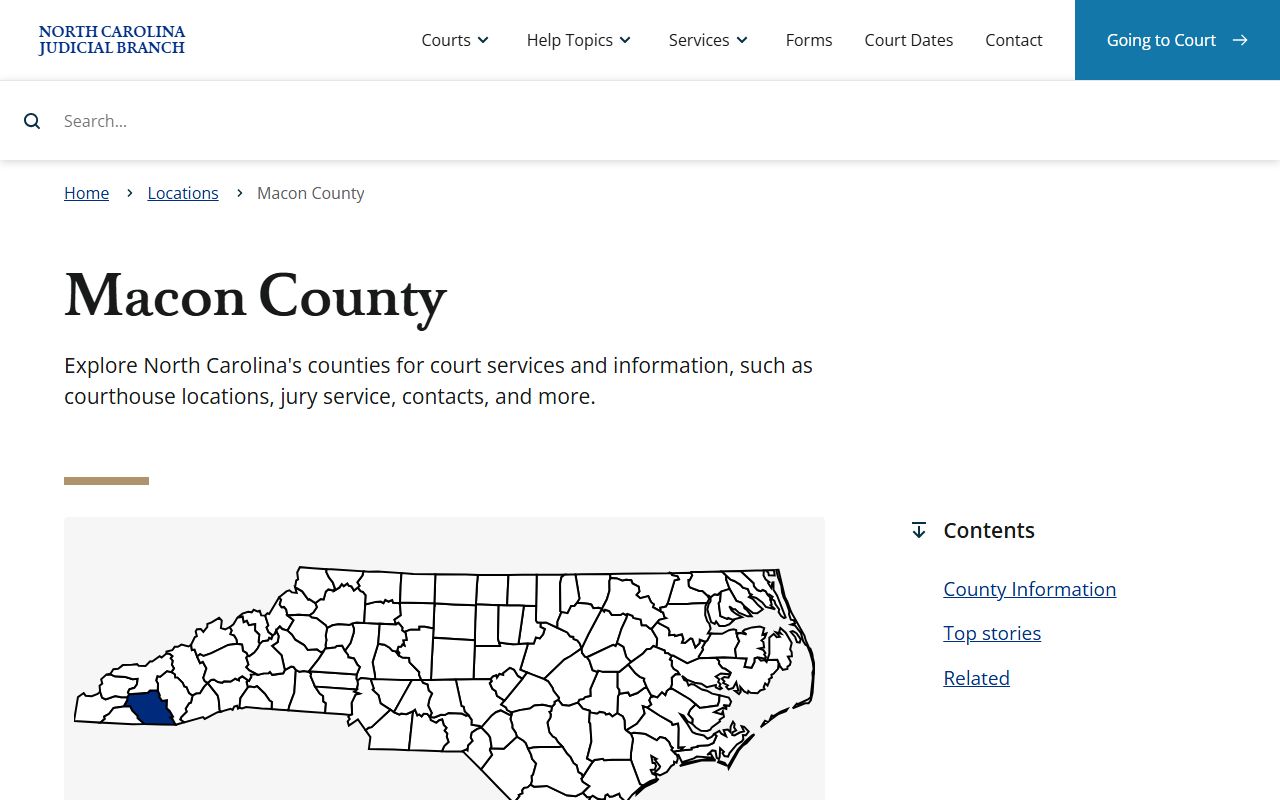
Court records reflect only cases filed in Macon County. If someone has a record in another county, it will not show up here. A statewide search fills that gap.
Note: A certified county search is limited to records filed within Macon County courts only.
Statewide Criminal Record Search
The NC State Bureau of Investigation provides statewide background checks. The SBI was established in 1937 and is headquartered in Raleigh. It serves as the central repository for criminal history data in the state. The Computerized Criminal History file, or CCH, draws from agencies across all 100 counties.
Fingerprint-based checks are the gold standard. The SBI uses SAFIS to match prints. Name-based searches are quicker but can produce false matches for common names. The NC Courts background check page describes both methods.
Note: The SBI's SAFIS system reduces the risk of misidentification that can occur with name-only searches.
Macon County Sheriff's Office
The Macon County Sheriff's Office handles law enforcement outside Franklin town limits. Deputies patrol a large area that includes mountain roads and remote communities. The office keeps arrest records and booking logs. These are public records.
The sheriff also manages the county detention center. Inmate information may be available by contacting the jail directly. Arrest data from the sheriff's office is shared with the SBI for inclusion in the statewide CCH system. The office works with state and federal agencies on cases that cross jurisdictions.
Free Online Search Tools
State-run databases can add useful information to a Macon County background check. Two key tools are available at no cost:
- The NC Sex Offender Registry lets you search by name or location for registered offenders
- The NC DPS Offender Search shows current and former state prison inmates
Both tools are free and open to anyone. No account is needed. The sex offender registry is managed by the SBI. The DPS tool covers the state prison system only. Neither replaces a formal background check, but they offer quick access to specific record types.
Macon County's mountain geography can make courthouse visits challenging for residents in outlying areas. The drive from parts of the Nantahala region to downtown Franklin may take considerable time on winding roads. For those who prefer not to make the trip, a mail request is an option. Send a completed Form AOC-CR-314 with a $25 check or money order to the Macon County Clerk of Superior Court. Include the person's full name and date of birth. The clerk will return a certified result once the search is finished. Because Macon County has a smaller caseload, processing times are often shorter than what you would find in more populated areas.
Macon County also borders Georgia, and some residents have connections across the state line. A North Carolina background check, whether conducted at the county level or through the SBI, only covers offenses reported within the state. If someone has lived in Georgia or another neighboring state, a separate search through that state's records system would be needed for full coverage. For records that fall within North Carolina's borders, the combination of a Macon County courthouse search and an SBI statewide request provides the broadest picture available.
Expunction Rules in North Carolina
Records in Macon County may have been expunged. Expunction removes a record from public view. The NC Courts expunction page explains eligibility. The filing fee is $175. It may be waived for charges that were dismissed.
Legal Aid of North Carolina offers free assistance. Call 1-866-219-5262 for help. Once expunged, a record will not appear in standard searches. The NC General Assembly sets these rules. Eligibility depends on the offense type, the outcome, and when it took place.
When reviewing background check results from Macon County, keep in mind that the clerk's records reflect only cases processed through the North Carolina state court system. Federal cases handled in the Western District of North Carolina are stored separately and do not appear in either a county search or an SBI query. Macon County falls within the federal court's western division. If someone was charged with a federal offense in this area, you would need to check the federal court records system, known as PACER, for those filings. For most standard background checks focused on state-level criminal history, the Macon County clerk and the SBI remain the primary resources.